
KDP–PUK Deadlock Deepens: Is a Snap Election Even Possible?
As the KDP–PUK deadlock over the next KRG cabinet deepens, the KDP is increasingly floating snap elections as a way out — but legal, financial, and institutional obstacles make the path nearly impossible.
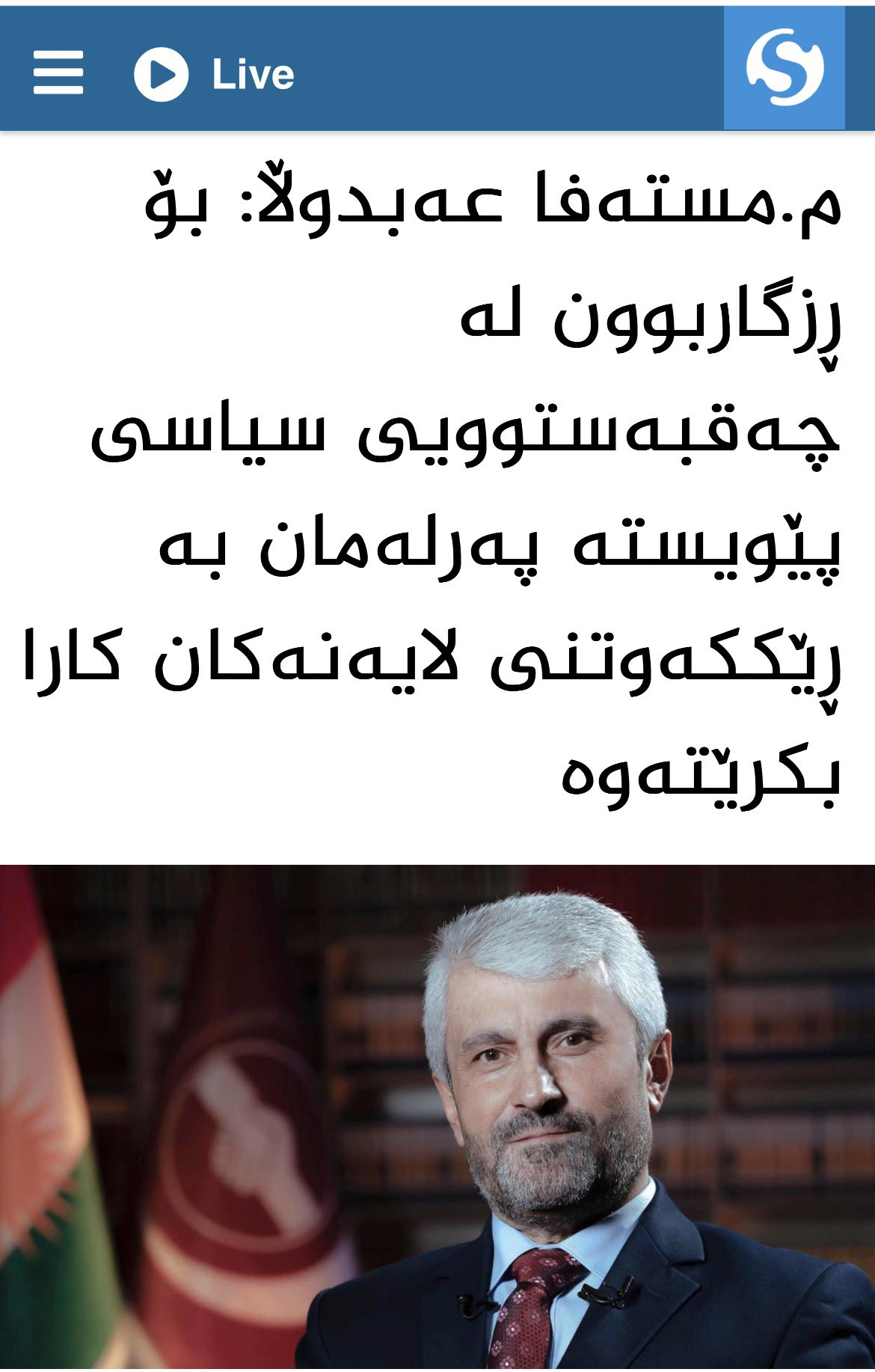
Mustafa Abdullah, Kurdistan Islamic Union
As the KDP–PUK deadlock over the next KRG cabinet deepens, the KDP is increasingly floating snap elections as a way out. But are early elections even possible in the near term?
Mustafa Abdullah, head of the Kurdistan Islamic Union faction in the Kurdistan Parliament, says they are unlikely. The KIU holds 7 of the parliament's 100 seats.
According to Abdullah, talk by both the KDP and PUK about dissolving parliament and holding new elections is mainly being used as a political pressure tool. Legally, he argued, such a step would be difficult to implement.
He said the issue has moved beyond the authority of the Kurdistan Region president because parliament has already held its first session. The Federal Supreme Court has also rejected several lawsuits related to dissolving the Kurdistan Parliament.
There are also technical obstacles. The Kurdistan Region does not currently have an independent electoral commission, while the legal mandate of Iraq's electoral commission has expired. Any repeat election would also require an estimated $20 million to $30 million, and Baghdad is unlikely to assume that cost.
For Abdullah, the only realistic path is political agreement: the winning lists must coordinate, attend a parliamentary session, and reactivate parliament. Only then, he said, can the current crisis be brought to an end.
However, given the near-total collapse in relations between the KDP and PUK, the prospects of reactivating parliament or reaching a breakthrough on cabinet formation remain highly unlikely.